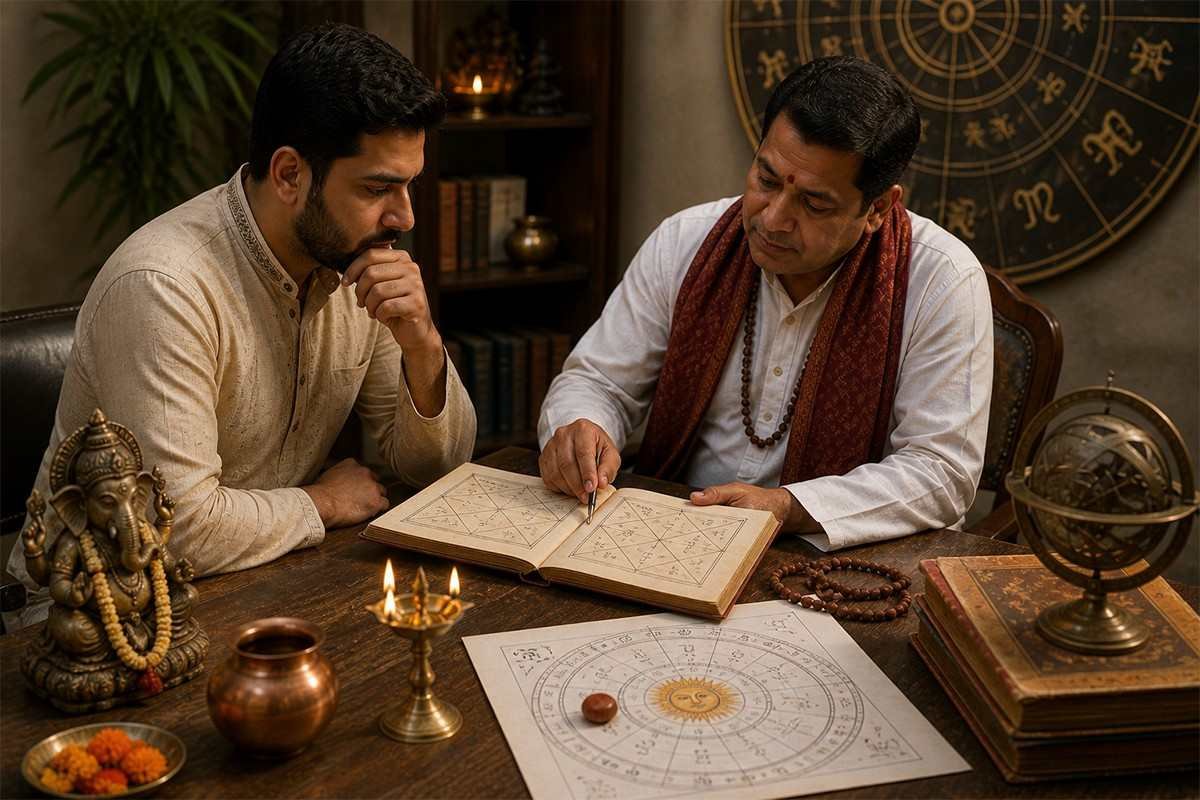



Astrology can be a genuine source of comfort, clarity, and grounded guidance during difficult times — but the same emotional vulnerability that makes people seek it out also makes them targets for a small but persistent group of fraudsters who use astrological language to manipulate rather than help. In cities across India, including here in Amritsar, we regularly meet people who have been misled, frightened, or financially exploited by someone posing as an astrologer.
This article isn’t about discouraging you from consulting an astrologer — it’s about helping you recognize the difference between a genuine practitioner and someone using fear as a sales tactic. Knowing these red flags can save you money, stress, and heartache.
Why Fake Astrologers Succeed
Fraudulent practitioners rely on a predictable pattern: they identify someone going through a stressful period — a troubled marriage, a stalled career, health worries, family conflict — and use vague, emotionally resonant statements that feel personally accurate. This technique, sometimes called cold reading, works because people naturally focus on the “hits” and forget the “misses,” a well-documented psychological pattern. If you’re curious about how this works more broadly, the Wikipedia article on cold reading is a useful, neutral explanation of the technique.
Understanding this doesn’t mean genuine astrology is fake — it means you should be alert to practitioners who lean on generic statements and emotional pressure rather than real chart analysis and honest conversation.
Red Flag 1: They Diagnose a “Curse” Within Minutes
One of the most common scam openings is an almost immediate declaration that you are cursed, that a family member has done black magic against you, or that a “kaal sarp dosh” or similar affliction is ruining your life — delivered within the first few minutes of meeting, often before any real chart is even examined. Genuine astrological analysis takes time and involves an actual look at your birth chart. A snap diagnosis of doom, especially one that conveniently requires an expensive remedy to fix, should immediately raise suspicion.
Red Flag 2: Mounting, Escalating Fees
A classic pattern: the first consultation is cheap or even free, but each subsequent visit reveals a “bigger problem” that needs a costlier remedy. Fees may start at a few hundred rupees and climb into lakhs over successive visits, with the astrologer always finding a new obstacle just as the previous one is supposedly resolved. Legitimate practitioners state their fees clearly at the outset and do not use fear to justify continuously rising costs.
Red Flag 3: Guaranteed Results, No Exceptions
“I guarantee your husband will return in seven days.” “I guarantee you will get that job.” No responsible astrologer — or doctor, or lawyer, for that matter — can honestly guarantee an outcome in situations that depend on other people’s decisions, timing, and countless real-world factors. Guarantees are a sales technique, not a professional standard.
Red Flag 4: Requests for Bank Details, OTPs, or Remote Payments to Unknown Accounts
This is one of the clearest signs of outright fraud, not just questionable ethics. No legitimate astrological remedy requires your online banking password, an OTP sent to your phone, or a wire transfer to a personal account you cannot verify. If someone claiming to be an astrologer asks for these, you are very likely speaking with a scammer, and you should end the conversation immediately and report it if possible.
Red Flag 5: Insisting on Total Secrecy
Be wary of anyone who tells you not to discuss the consultation with your spouse, parents, or close friends “or the remedy won’t work.” This isolates you from people who could offer a reality check and is a well-known manipulation tactic used across many types of scams, not just astrological ones.
Red Flag 6: Objects, Rituals, or “Blessed” Items Sold at Inflated Prices
Some fraudulent operators sell “specially energized” gemstones, yantras, or amulets at wildly inflated prices, claiming ordinary versions won’t work. While gemstone and ritual remedies do have a place in genuine Vedic tradition, they should be reasonably priced, clearly explained, and never pushed as the only path to solving your problem. You can read about how gemstone remedies are properly approached on our gemstone solutions page.
Red Flag 7: No Credentials, No Track Record, No Transparency
Genuine astrologers are typically willing to talk about their training, experience, and background. A practitioner who deflects basic questions, has no verifiable presence (no address, no consistent phone number, no online footprint at all), or operates entirely through unsolicited cold calls and messages warrants extra caution.
Red Flag 8: Pressuring You to Decide Immediately
“This remedy must be done today, under this specific moon phase, or it will never work again.” Urgency is a manipulation tool used to prevent you from thinking clearly, researching the practitioner, or consulting someone you trust. A real astrological remedy can almost always wait a day or two for you to make an informed decision.
What a Trustworthy Astrologer Looks Like Instead
A genuine practitioner will:
- Take time to understand your actual concerns before offering any remedy.
- Explain their reasoning in terms you can follow, not vague mystical language alone.
- Quote clear, reasonable fees upfront, with no pressure to pay more later.
- Never ask for banking credentials, OTPs, or passwords.
- Respect your right to think it over, seek a second opinion, or say no.
- Talk about probability and guidance, not guarantees.
You can read more about how we structure honest consultations on our about page, where Astrologer Raj Bengali’s background and approach are described in detail.
How to Verify Before You Commit
Before paying anyone for astrological remedies, take a few simple precautions: ask for their full name and location, search for reviews or complaints online, ask a friend or family member for their opinion, and never make your first payment under pressure. A short delay to verify a practitioner costs you nothing; rushing into a payment with a stranger can cost you a great deal.
Our Commitment to Transparency
At Bengali Jyotish Center in Main Bazar, Kot Khalsa, Amritsar, we believe trust is earned through honesty, not fear. We explain our remedies clearly, we never demand banking details, and we never claim guaranteed outcomes. Our full range of consultation options is described on our services page.
If you’ve had an unsettling experience with another practitioner, or simply want to speak with someone who will answer your questions honestly before asking for a single rupee, we invite you to contact us. Call or WhatsApp Astrologer Raj Bengali directly at +91-9779264257 for a transparent, no-pressure conversation.
Frequently Asked Questions
How can I tell if an astrologer is genuinely qualified?
Look for a consistent, verifiable presence — a real address, a track record, willingness to discuss their background and methods, and reviews from other clients. Genuine practitioners are transparent, not evasive, when asked reasonable questions.
Is it normal for an astrologer to ask for my birth details?
Yes, your date, time, and place of birth are standard and necessary for an accurate chart reading. This is different from being asked for banking information, OTPs, or passwords, which no legitimate astrologer needs.
What should I do if an astrologer demands secrecy from my family?
Treat this as a serious warning sign. Legitimate consultations do not depend on isolating you from people who care about you, and you are always free to discuss your situation with someone you trust.
Can I get a second opinion if I’m unsure about advice I’ve already received?
Absolutely. A second, honest opinion is a reasonable and sensible step, especially if you were pressured into a decision or asked for a large sum of money. Trustworthy astrologers will never discourage you from seeking one.
What should I do if I’ve already been scammed?
Stop any further payments, document your communications, and consider reporting the matter to local police or consumer protection bodies. Speaking with a transparent practitioner afterward can help you understand what happened and move forward.