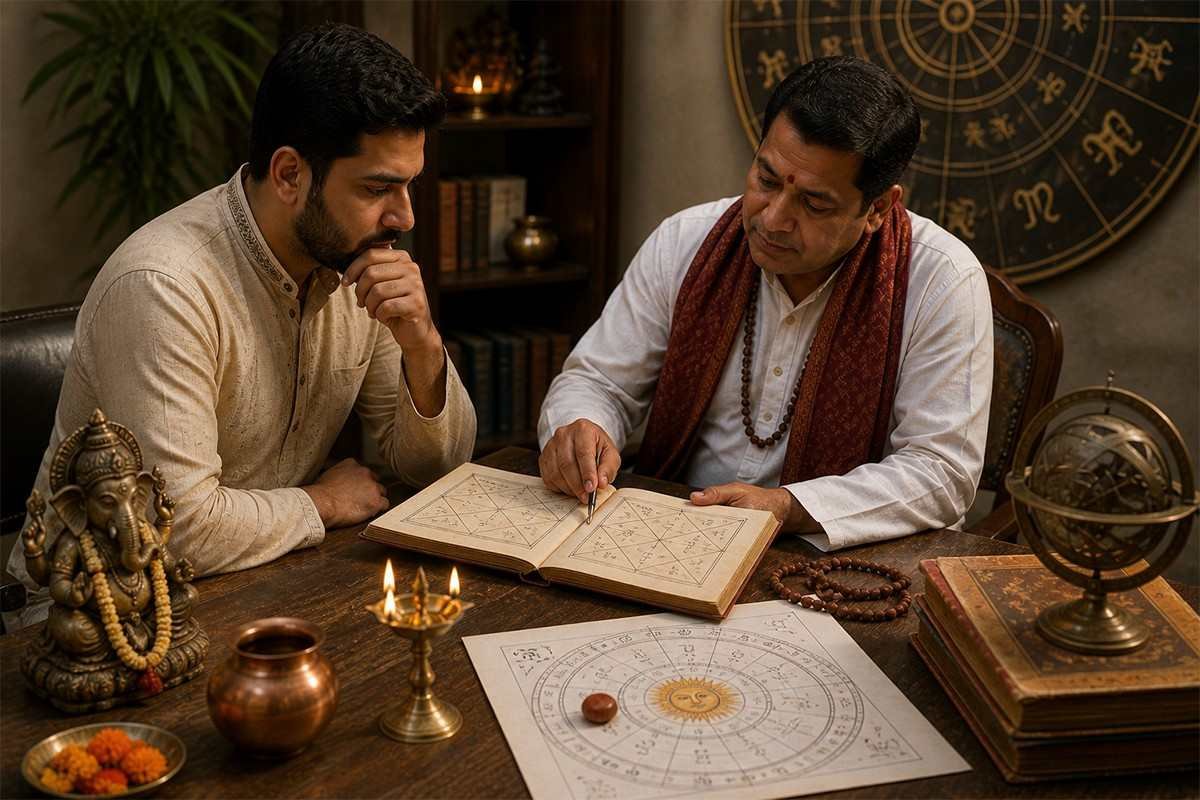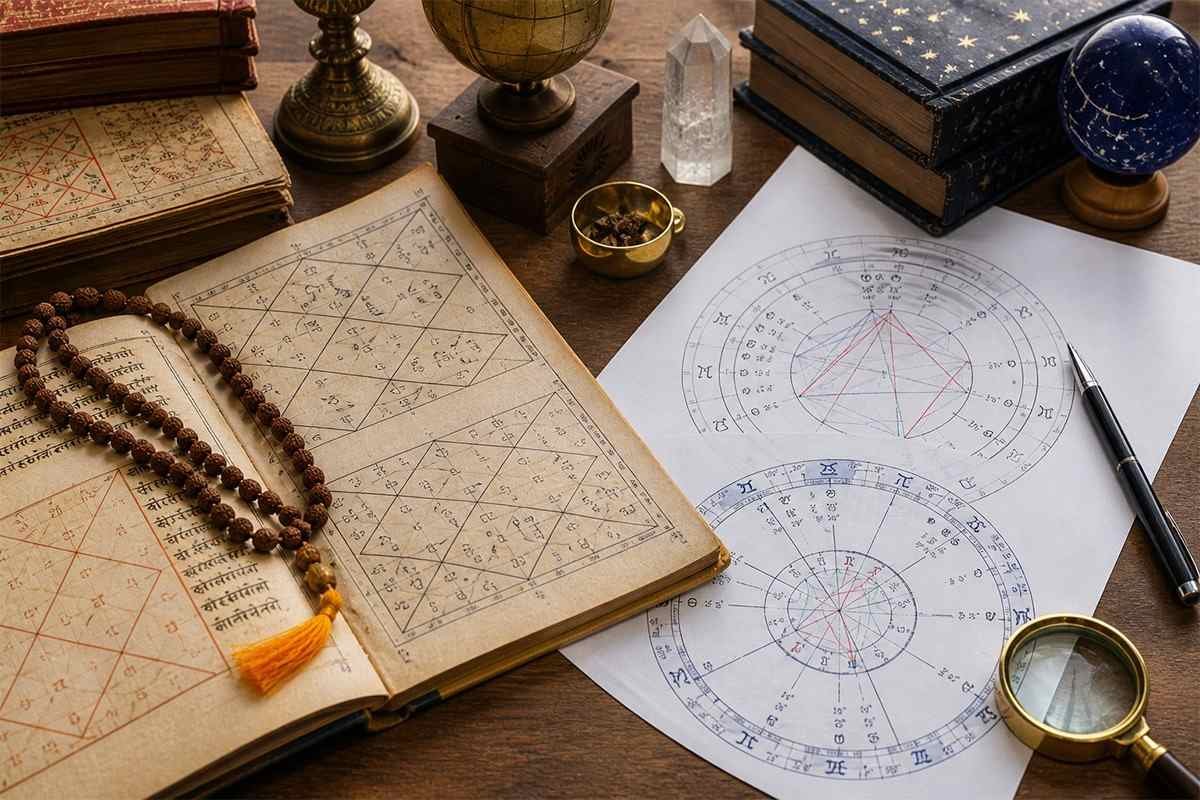


Few phrases spark as much anxiety in Indian households as “Sade Sati shuru ho gayi hai” — Sade Sati has begun. Family WhatsApp groups fill with warnings, forwards claim disaster is coming, and some people even postpone important decisions out of fear. But how much of what circulates about Shani Sade Sati is rooted in genuine classical astrology, and how much is exaggerated folklore? At Bengali Jyotish Center, Astrologer Raj Bengali regularly meets clients who are far more frightened of Sade Sati than the tradition itself actually warrants — and separating fact from fear is often the first and most valuable thing a consultation provides.
What Is Shani Sade Sati, Literally?
“Sade Sati” translates to “seven and a half” in Hindi, referring to the approximately seven-and-a-half-year period during which the planet Saturn (Shani) transits through three positions relative to your natal Moon sign: the sign before your Moon sign, your Moon sign itself, and the sign after it. Because Saturn takes roughly two and a half years to move through each zodiac sign, this three-sign transit adds up to about seven and a half years in total.
In Vedic astrology, Saturn is the planet of discipline, structure, delay, responsibility, hard work, and karmic accountability. It is often described as a strict but fair teacher rather than a malevolent force — its lessons can feel heavy, but classical texts frame them as ultimately constructive. You can read more about Saturn’s broader astrological symbolism on Wikipedia’s article on Saturn in astrology.
The Three Phases of Sade Sati
Traditional Vedic astrology divides this transit into three distinct phases, each said to carry a different flavour of influence:
- Rising phase (first 2.5 years): Saturn transits the sign before your natal Moon. This phase is traditionally associated with mental stress, family-related pressure, and the early stirrings of change.
- Peak phase (middle 2.5 years): Saturn transits directly over your natal Moon sign. Classical texts describe this as often the most intensely felt phase — affecting health, emotional stability, and major life decisions.
- Setting phase (final 2.5 years): Saturn transits the sign after your natal Moon. This phase is traditionally linked to financial matters, career shifts, and the gradual settling of the lessons learned during the earlier phases.
Importantly, the specific themes and intensity of each phase are said to vary considerably depending on which zodiac sign is involved and how Saturn is otherwise placed and aspected in your unique birth chart — this is not a one-size-fits-all seven-and-a-half-year script.
Myth vs. Reality: Common Misconceptions
Myth: Sade Sati Always Brings Disaster
Reality: This is the single biggest misconception, and it is simply not how classical Vedic astrology describes Saturn’s transit. Sade Sati is traditionally understood as a period of tests, restructuring, and karmic accounting — not a guaranteed sentence of misfortune. Many people report their Sade Sati period bringing hard-won growth, career stability after initial struggle, increased maturity, or spiritual development, rather than pure hardship. The outcome depends heavily on how Saturn is placed in the individual’s full birth chart, not the transit alone.
Myth: Everyone Experiences Sade Sati the Same Way
Reality: A person with Saturn well-placed and strong in their birth chart, or with generally supportive planetary combinations, is traditionally expected to experience a noticeably milder Sade Sati than someone whose chart already shows Saturn afflicted or weak. This is why an astrologer must study your complete horoscope — not simply calculate which sign your Moon sits in — before offering any real guidance about what your particular Sade Sati might involve.
Myth: You Must Avoid All Major Decisions During Sade Sati
Reality: While tradition does suggest exercising extra care, patience, and discipline during this period, blanket advice to avoid marriage, career moves, or investments for seven and a half years is an oversimplification not supported by classical texts. Many important life milestones happen during Sade Sati for countless people without incident. The traditional advice is more accurately about approaching decisions with more caution, planning, and grounded effort — not total avoidance.
Myth: Sade Sati Cannot Be Managed
Reality: Vedic tradition offers a range of remedial practices specifically associated with easing Saturn’s influence. While no remedy can be promised to eliminate challenges entirely, these practices are widely followed as supportive, faith-based measures.
Traditional Remedies for Sade Sati
These remedies are rooted in centuries of Vedic practice and are meant to complement — never replace — sensible real-world planning, professional advice, and personal effort:
- Shani Shanti Puja: A dedicated worship ritual for Saturn, often performed on Saturdays.
- Hanuman worship: Lord Hanuman is traditionally considered a powerful protector against Saturn’s harsher effects; reciting the Hanuman Chalisa is a very common practice during Sade Sati.
- Shani mantras: Regular chanting of Saturn-related mantras is believed to help ease the transit’s intensity.
- Fasting on Saturdays: Many people observe a partial or full fast on Saturdays during this period as an act of discipline and devotion.
- Charitable acts: Donating black sesame seeds, mustard oil, black clothing, or iron items on Saturdays is a traditional Saturn-pleasing practice.
- Hawan and pooja: A structured fire ceremony dedicated to Saturn can be performed for those seeking a more formal ritual approach — you can learn more about how these ceremonies are conducted through our hawan and pooja services.
- Gemstone consideration: Blue sapphire (Neelam) is sometimes recommended for a well-placed Saturn, but this stone is considered powerful and unpredictable if prescribed incorrectly, so it should only be worn after proper chart analysis via our gemstone solutions consultation.
How to Know What Your Own Sade Sati Actually Involves
Because Sade Sati’s real impact depends so heavily on your individual chart — the strength of your Moon, the placement and dignity of Saturn, aspects from other planets, and the running Dasha period at the same time — the only reliable way to understand your own situation is through a full, personalised horoscope analysis rather than generic online date calculators. Two people going through Sade Sati at the same age can have completely different experiences because their underlying charts are different.
If you’re currently in Sade Sati, approaching one, or simply anxious after hearing frightening stories from family or friends, a grounded, honest reading can bring real peace of mind — and if remedial guidance is genuinely appropriate for your chart, it can be paired sensibly with your regular efforts in health, career, and relationships. For readers dealing with a broader sense of stagnation or heaviness during this period, our negative energy removal service and spiritual solutions are also worth exploring alongside a chart consultation.
Astrologer Raj Bengali has guided countless clients through their Sade Sati years with realistic, chart-specific advice rather than fear-based generalisations. Call or WhatsApp Bengali Jyotish Center at +91-9779264257 to schedule a personal consultation and understand exactly what your own Sade Sati transit involves.
Frequently Asked Questions
Does Sade Sati always mean seven and a half years of bad luck?
No. Sade Sati is traditionally described as a period of tests, discipline, and restructuring rather than guaranteed misfortune. Its actual effect varies enormously based on the individual’s complete birth chart, not the transit alone.
How can I find out if I am currently in Sade Sati?
You need your Moon sign identified through an accurate birth chart, along with Saturn’s current transit position. A qualified astrologer can tell you not just whether you’re in Sade Sati, but which of the three phases you’re in and how it’s likely to interact with your specific chart.
Which phase of Sade Sati is considered the most challenging?
The middle phase, when Saturn transits directly over the natal Moon sign, is traditionally considered the most intensely felt of the three phases. However, this varies by individual chart, and some people experience the first or third phase more strongly.
Can remedies completely remove the effects of Sade Sati?
No remedy can guarantee complete removal of a transit’s traditional effects. Practices like Shani puja, mantra chanting, fasting, and charity are complementary, faith-based measures meant to support you through the period alongside your own practical efforts, not replace them.
Is Sade Sati the same as Kaal Sarp Dosha?
No, they are entirely different concepts. Sade Sati is a temporary Saturn transit tied to your Moon sign, while Kaal Sarp Dosha is a chart condition based on the placement of all planets relative to Rahu and Ketu at birth. They can occur separately or overlap in a person’s life.