
Of all the doshas discussed in Vedic astrology, Pitra Dosha is perhaps the most emotionally resonant, because it touches on family, ancestry, and unresolved debts believed to be carried forward across generations. Many clients come to Bengali Jyotish Center after a family elder mentions Pitra Dosha as a possible explanation for a run of setbacks, wanting to understand what it actually means and whether it’s something to genuinely worry about. Astrologer Raj Bengali’s approach is always the same: explain the tradition honestly, check the actual chart carefully, and never lean on fear to sell a remedy that isn’t needed.
What Is Pitra Dosha?
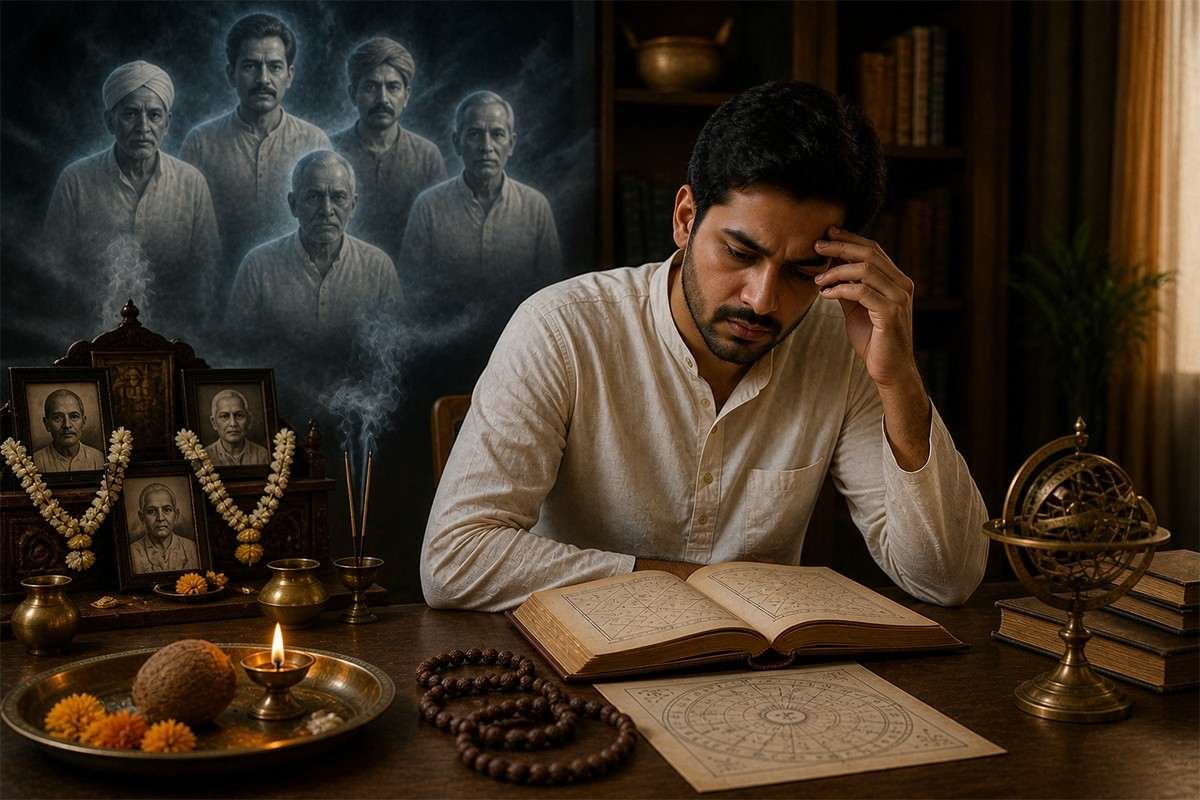
“Pitra” refers to ancestors or forefathers, and “Dosha” means a flaw or affliction in the birth chart. Pitra Dosha, in Vedic astrology, refers to a chart condition believed to reflect unresolved obligations, unfulfilled rites, or unsettled matters connected to one’s ancestral lineage — most often linked to the Sun, and to planets like Rahu, Ketu, or Saturn afflicting the 9th house (traditionally associated with father, forefathers, and dharma) or the position of Jupiter, depending on which classical framework an astrologer follows.
This concept connects to a much broader theme found across many world cultures: the idea that honouring and remembering one’s ancestors matters for the wellbeing of the living. You can read more about this wider tradition on Wikipedia’s article on ancestor veneration. In the Indian context, this takes the specific form of rituals like Shraddha and Tarpan, performed to honour deceased ancestors and, traditionally, to ease any Pitra Dosha present in a descendant’s chart.
How Pitra Dosha Is Believed to Form
Classical texts describe several traditional causes associated with this dosha, though it’s worth remembering these are beliefs rooted in scripture and cultural practice, not verified historical facts:
- Unperformed or incomplete last rites for a deceased ancestor, or rituals conducted improperly.
- Disrespect shown to elders or ancestors during their lifetime, or ongoing neglect of ancestral memory.
- An ancestor’s own unresolved karma being reflected forward into a descendant’s chart.
- Family disputes over inheritance or property that remain unresolved across generations.
- A soul’s unfulfilled wishes or unnatural death in the family line, according to traditional belief.
An astrologer identifies the likelihood of Pitra Dosha primarily by examining affliction to the Sun and the 9th house in the birth chart, along with related planetary combinations — not through guesswork or general family history alone.
Commonly Described Signs and Symptoms
Traditional astrology associates certain recurring patterns with an active, unaddressed Pitra Dosha. As with every dosha, these are described tendencies from classical texts — not medical diagnoses — and many of these challenges have entirely ordinary explanations unrelated to any dosha at all.
- Recurring, hard-to-explain obstacles despite consistent effort.
- Difficulty conceiving or repeated delays around having children.
- Chronic or recurring health issues within the family that don’t respond straightforwardly to treatment.
- Persistent tension, disputes, or a lack of unity among family members.
- A general sense of stagnation in career or business despite genuine hard work.
- Financial instability that seems to repeat itself despite sound planning.
Again, it bears repeating: none of these symptoms alone confirm Pitra Dosha. Health concerns should always be discussed with a qualified doctor, fertility difficulties with a medical specialist, and financial or legal disputes with the relevant professionals — astrology can offer a complementary, reflective lens, but it is not a substitute for professional care in these areas.
Does Pitra Dosha Guarantee Misfortune?
No. As with every dosha discussed in Vedic astrology, Pitra Dosha’s real significance depends entirely on the full context of the birth chart — not on its presence alone. Key factors that shape its actual severity include:
- How strongly the Sun and 9th house are actually afflicted, versus a mild or borderline configuration.
- Whether beneficial planets like Jupiter offer any protective aspect to the affected houses.
- The overall strength of the chart as a whole, including the current running Dasha period.
- Whether family rituals and ancestral remembrance have already been consistently observed.
Many people carry mild traces of this configuration without it meaningfully shaping their life outcomes. A responsible astrologer will always look at the complete picture before suggesting that Pitra Dosha is a significant factor worth addressing — and will never use it to create unnecessary fear or urgency.
Traditional Remedies for Pitra Dosha
Vedic tradition offers a well-established set of remedial practices for Pitra Dosha, most of them centred on honouring ancestors rather than “fixing” a flaw. These remedies are spiritual and cultural practices meant to bring peace of mind and a sense of resolution — they are complementary to, not a replacement for, family communication, legal processes around inheritance disputes, or medical and professional advice where relevant.
- Shraddha rituals: Formal ceremonies performed on the death anniversary of an ancestor, or during Pitru Paksha (a designated period in the Hindu calendar for honouring ancestors), to offer respect and gratitude.
- Tarpan: A water-offering ritual dedicated specifically to deceased ancestors, often performed at sacred rivers or during Pitru Paksha.
- Pitra Dosha Nivaran Puja: A dedicated puja performed by a priest, sometimes at pilgrimage sites traditionally associated with ancestral rites, such as Gaya in Bihar.
- Feeding crows, cows, or Brahmins: A traditional daily or periodic offering believed to honour ancestral spirits.
- Hawan dedicated to ancestors: A structured fire ceremony can be performed as part of a broader ancestral remembrance practice — our hawan and pooja services can guide you through this process appropriately.
- Charitable giving: Donating food, clothing, or money to those in need, especially on significant dates like Amavasya (new moon), is a widely followed practice.
Because Pitra Dosha often intersects with real family dynamics — old disputes, inheritance tension, or communication breakdowns — addressing the emotional and practical family side matters just as much as any ritual. If ongoing family tension is part of your situation, our family problem solutions service looks at this alongside the astrological picture, rather than treating the dosha in isolation from real relationships.
Approaching Pitra Dosha with Balance, Not Fear
It’s easy for the idea of “ancestral karma” to feel heavy or even guilt-inducing, but that isn’t how this tradition is meant to be understood. At its heart, Pitra Dosha reflects a very old and, in many ways, beautiful cultural value: staying connected to where you come from, and honouring the people whose lives made yours possible. Even if a formal dosha isn’t strongly present in your chart, many families find real emotional value in observing Shraddha, Tarpan, or simple acts of remembrance each year.
If you’re wondering whether Pitra Dosha genuinely applies to your chart, or you’d simply like guidance on the right rituals for your family’s specific situation, a personal consultation is the most reliable way to get grounded, honest answers rather than generic fear-based warnings found online. Astrologer Raj Bengali will review your complete birth chart, explain clearly what it does and doesn’t show, and recommend only what is genuinely relevant to you.
Call or WhatsApp Bengali Jyotish Center at +91-9779264257 to schedule your personal chart analysis and consultation with Astrologer Raj Bengali.
Frequently Asked Questions
Is Pitra Dosha the same in every family, regardless of the chart?
No. Pitra Dosha’s presence and intensity are determined by an individual’s specific birth chart, not by family history alone. Two siblings can even show different levels of this configuration depending on their individual charts, since birth time and planetary positions differ.
Can Pitra Dosha cause infertility or serious illness on its own?
Traditional astrology lists difficulty conceiving and recurring health issues as commonly described tendencies associated with this dosha, but these have many possible causes. Medical concerns should always be evaluated by a qualified doctor — astrology can offer a complementary perspective, not a medical diagnosis or treatment.
Do I need to perform rituals at a specific pilgrimage site like Gaya?
It is a traditionally favoured location for Pitra Dosha Nivaran rituals, but it is not the only option. Many remedies, including Tarpan and Shraddha, can be performed appropriately elsewhere with proper guidance from a qualified priest or astrologer.
How do I know if my problems are actually caused by Pitra Dosha?
Only a detailed review of your birth chart — checking the Sun, the 9th house, and related planetary combinations — can indicate whether this dosha is meaningfully present. It should never be assumed based on general family struggles alone.
Will performing Pitra Dosha remedies guarantee my problems disappear?
No remedy can guarantee a specific outcome. Traditional rituals are complementary spiritual practices meant to bring resolution, peace of mind, and support alongside your own continued efforts and, where relevant, professional medical, legal, or financial advice.