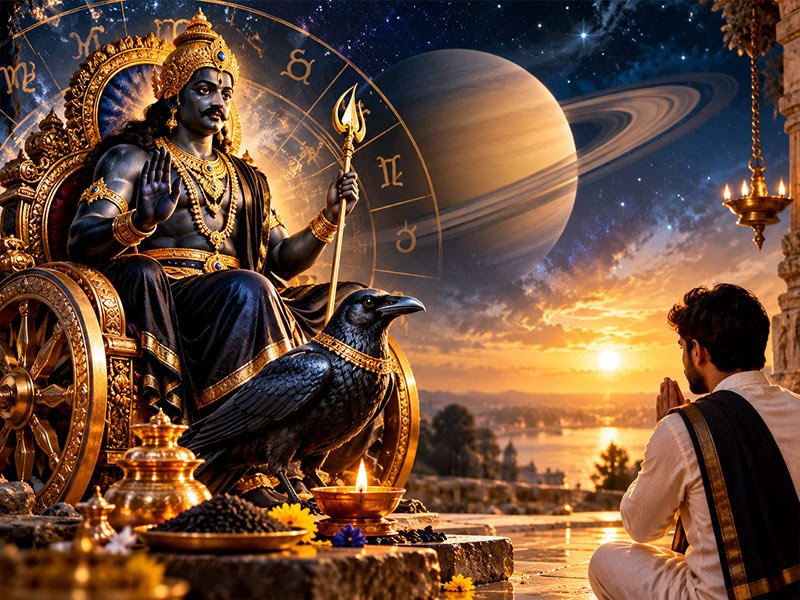



Rahu and Ketu are unlike any other pair of planets in Vedic astrology — they are not physical bodies at all, but the two mathematical points where the Moon’s orbit crosses the Sun’s apparent path, known as the lunar nodes. Despite having no physical mass, few points in a chart are discussed with as much intensity, especially when it comes to relationships and career. This guide explains what a Rahu-Ketu transit actually involves and what it is traditionally believed to influence in these two areas.
What Rahu and Ketu Actually Are
Rahu is the North Node and Ketu is the South Node of the Moon’s orbit, always positioned exactly opposite each other in the chart, 180 degrees apart. They move retrograde (backward) through the zodiac, changing signs roughly every eighteen months, which is far more frequent than most other planetary transits and one reason their effects are often described as sudden or unpredictable compared to the slower, steadier influence of planets like Saturn or Jupiter. You can read more about their position in Hindu astronomical tradition at Rahu and Ketu.
Rahu: Desire, Ambition, and the Unfamiliar
Rahu is traditionally associated with worldly desire, ambition, obsession, and a pull toward the unfamiliar or foreign. In relationships, a Rahu transit through relevant houses is sometimes associated with sudden attractions, unconventional connections, or an intense, almost obsessive quality to a new relationship that may not follow a typical, steady pattern. In career matters, Rahu is often linked to sudden opportunities, unconventional career paths, foreign connections, or rapid ambition — for better or worse, depending on the rest of the chart.
Ketu: Detachment, Endings, and Introspection
Ketu, sitting exactly opposite Rahu, is associated with detachment, past-life karma, endings, and a pull toward introspection or spirituality. A Ketu transit through relationship-relevant houses is sometimes associated with a loosening of attachment — relationships that quietly fade, a partner who becomes more emotionally distant, or a personal shift toward valuing independence over romantic attachment. In career terms, Ketu can be associated with a loss of interest in a previously important path, or a pull toward unconventional, spiritual, or research-oriented work.
Why These Transits Feel So Disruptive
Because Rahu and Ketu move faster than most other grahas and represent such opposing energies — worldly pursuit versus detachment — their transits are often experienced as periods of genuine instability or transition rather than gradual change. This is a large part of why the current Rahu-Ketu transit is such a commonly asked-about topic in consultations: people feel the disruption before they understand its source.
What to Actually Do During a Rahu-Ketu Transit
Rather than reacting to every sudden impulse or withdrawal with alarm, a more grounded approach involves recognising the pattern for what it traditionally represents — a period that tends to test whether your desires and your detachments are actually aligned with what serves you long-term. In relationships, this can mean pausing before making an impulsive decision driven purely by sudden attraction or sudden distance. In career matters, it can mean weighing an unconventional opportunity carefully rather than either dismissing it outright or chasing it blindly.
If a relationship or career situation feels unusually unstable right now, it is also worth considering whether a specific issue — rather than the general transit alone — is driving it. Our guides on astrological signs you are in the wrong career and husband-wife disputes look at these areas more specifically.
Getting the Transit’s Exact Effect on Your Chart
Because Rahu and Ketu’s current sign placement, and which houses they activate, depends on the exact date and your individual chart, a general description like this one can only cover broad tendencies. A proper reading looks at exactly which houses the nodes are currently transiting in your chart, how that interacts with your existing planetary periods, and what it means specifically for your relationships and career right now.
If you want to understand what the current Rahu-Ketu transit means specifically for your chart, Astrologer Raj Bengali at Bengali Jyotish Center in Amritsar offers personalised readings. Call or WhatsApp +91-9779264257 to book a consultation.
Frequently Asked Questions
How often do Rahu and Ketu change signs?
Roughly every eighteen months, which is considerably more frequent than most other planetary transits, and part of why their effects are often felt as sudden rather than gradual.
Does a Rahu-Ketu transit always disrupt relationships?
Not always, and not for everyone equally. The effect depends on which houses the transit activates in your individual chart and how it interacts with your existing dasha period. A personalised reading is needed to know your specific picture.
Is Ketu always associated with negative outcomes in career?
No. Ketu’s detachment can also manifest as a healthy release from a career path that was no longer serving you, or a pull toward meaningful, research-oriented, or spiritual work rather than something purely negative.
Why do Rahu and Ketu move backward through the zodiac?
As the Moon’s orbital nodes, their motion is a mathematical consequence of how the Moon’s orbit intersects the Sun’s apparent path, which results in a retrograde motion unlike the planets, which generally move forward through the signs.
Should I make a major relationship or career decision purely based on this transit?
It is better to treat the transit as context for understanding sudden shifts in desire or detachment, not as the sole basis for a major decision. Pairing that understanding with a grounded look at your actual circumstances is more reliable.