

Walk into almost any home that takes Vastu seriously and you will usually find a Tulsi plant near the entrance and a distinct absence of cacti indoors. Plants occupy a specific, well-defined place in Vastu Shastra — not just as decoration, but as living elements believed to influence the energy of a home in very particular ways depending on type and placement. This guide covers what to grow, what to avoid, and where to place them.
Plants Traditionally Considered Auspicious
- Tulsi (Holy Basil): Considered one of the most sacred plants in Hindu tradition, Tulsi is traditionally kept near the entrance or in a courtyard, ideally facing East or North, and is associated with purifying the home’s energy and inviting positivity.
- Money Plant: Widely kept indoors and associated with financial prosperity and growth. It is traditionally recommended for the South-East corner of the home, which is also associated with wealth in Vastu.
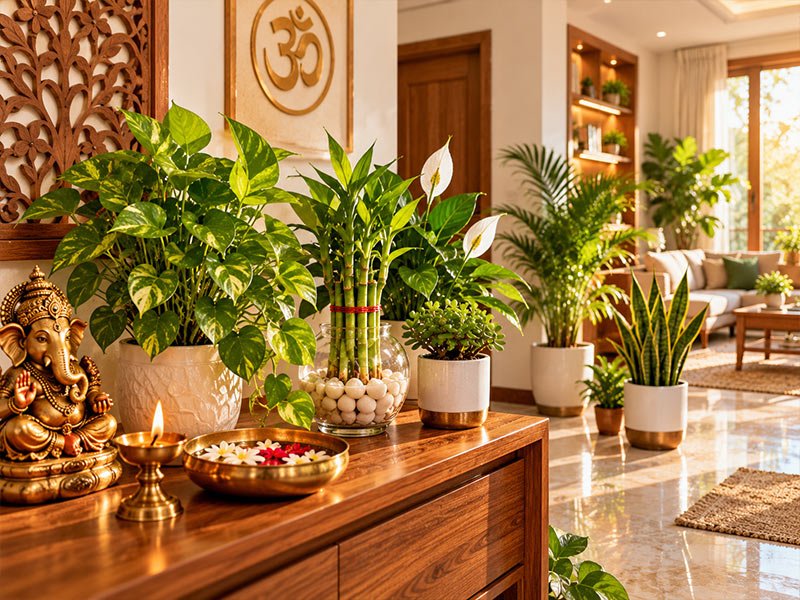
- Areca Palm and Bamboo Plant: Both are associated with positive energy flow and are commonly placed in living rooms or near entrances for their believed air-purifying and harmonising qualities.
- Jasmine: Associated with purity and calm, often planted near windows or in gardens for its fragrance and the peaceful energy it is believed to bring.
- Marigold: Common in Indian homes for its ritual use in daily puja as well as its traditional association with positivity and auspiciousness.
Where These Plants Are Traditionally Placed
Placement matters as much as the plant itself. The North-East corner (Ishan) is generally reserved for the most sacred plants like Tulsi, since this direction is already associated with spiritual energy. The South-East is linked to wealth and is where a Money Plant is traditionally positioned. Entrances benefit from plants on either side that are full and healthy, as a withering or sparse plant right at the entry point is considered to send the opposite of the intended welcoming signal.
Plants Traditionally Advised Against Indoors
Just as some plants are favoured, others are traditionally avoided inside the home, primarily because of their sharp, thorny, or otherwise “aggressive” physical form, which Vastu principles generally associate with cutting or disruptive energy rather than nurturing it:
- Cacti and other thorny plants: Their sharp spines are traditionally associated with tension and conflict, which is why most Vastu guidance advises against keeping them indoors, particularly in bedrooms or living spaces.
- Bonsai trees: Despite their popularity as decor, bonsai are generally discouraged in traditional Vastu because the deliberate stunting of a tree’s natural growth is seen as symbolically restricting growth and progress within the home.
- Dead or dried plants: Any plant, regardless of species, that has died or dried out is considered to carry stagnant, negative energy and should be removed promptly rather than left in place.
- Artificial or plastic plants: While not harmful, they are generally considered to carry none of the positive living energy that Vastu principles attribute to real, healthy plants.
General Plant Care as a Vastu Principle in Itself
Beyond the specific species, Vastu guidance consistently emphasises that healthy, well-tended plants are themselves the point — a neglected, yellowing plant is considered worse for a home’s energy than having no plant at all in that spot. This ties into a broader Vastu principle that clutter, neglect, and disrepair anywhere in the home work against the positive energy that careful placement is meant to invite, a theme we explore more generally in common Vastu mistakes that invite negative energy.
Bringing It Together With the Rest of Your Home
Plant placement works best as part of a broader approach to the home’s energy rather than as an isolated fix. If you are looking at your home’s layout more holistically, our guides on Vastu for the main entrance and Vastu tips for a peaceful and prosperous home cover the other key areas worth considering alongside your plant choices.
If you would like a personalised Vastu assessment of your home, including where to place plants for your specific layout, Astrologer Raj Bengali at Bengali Jyotish Center in Amritsar offers detailed consultations. Call or WhatsApp +91-9779264257 to book a session. For more on this tradition, see Vastu Shastra.
Frequently Asked Questions
Where should a Money Plant be placed according to Vastu?
The South-East corner of the home is generally recommended for a Money Plant, since this direction is traditionally associated with wealth and prosperity in Vastu Shastra.
Why are cacti considered bad for Vastu?
Their sharp thorns are traditionally associated with tension, conflict, and disruptive energy, which is why most Vastu guidance recommends avoiding them indoors, especially in bedrooms and living areas.
Is it true that bonsai trees are inauspicious?
In traditional Vastu belief, yes — the deliberate stunting of a bonsai’s natural growth is seen as symbolically restricting growth and progress within the home, which is why it is generally discouraged.
Where should Tulsi be planted at home?
The North-East corner or near the main entrance, ideally facing East or North, is traditionally considered the most favourable placement for Tulsi, given its strong association with spiritual purity.
What should I do with a plant that has died or dried out?
It should be removed promptly. A dead or dried plant is considered to carry stagnant, negative energy, which is thought to work against the positive effects a healthy plant is meant to bring.